Travel + Culture
Notes from Amangiri
On desert light, silence, architecture, and what becomes visible when there is less to look at.
By Jansel Hutton Kelly — 13 AUGUST 2026
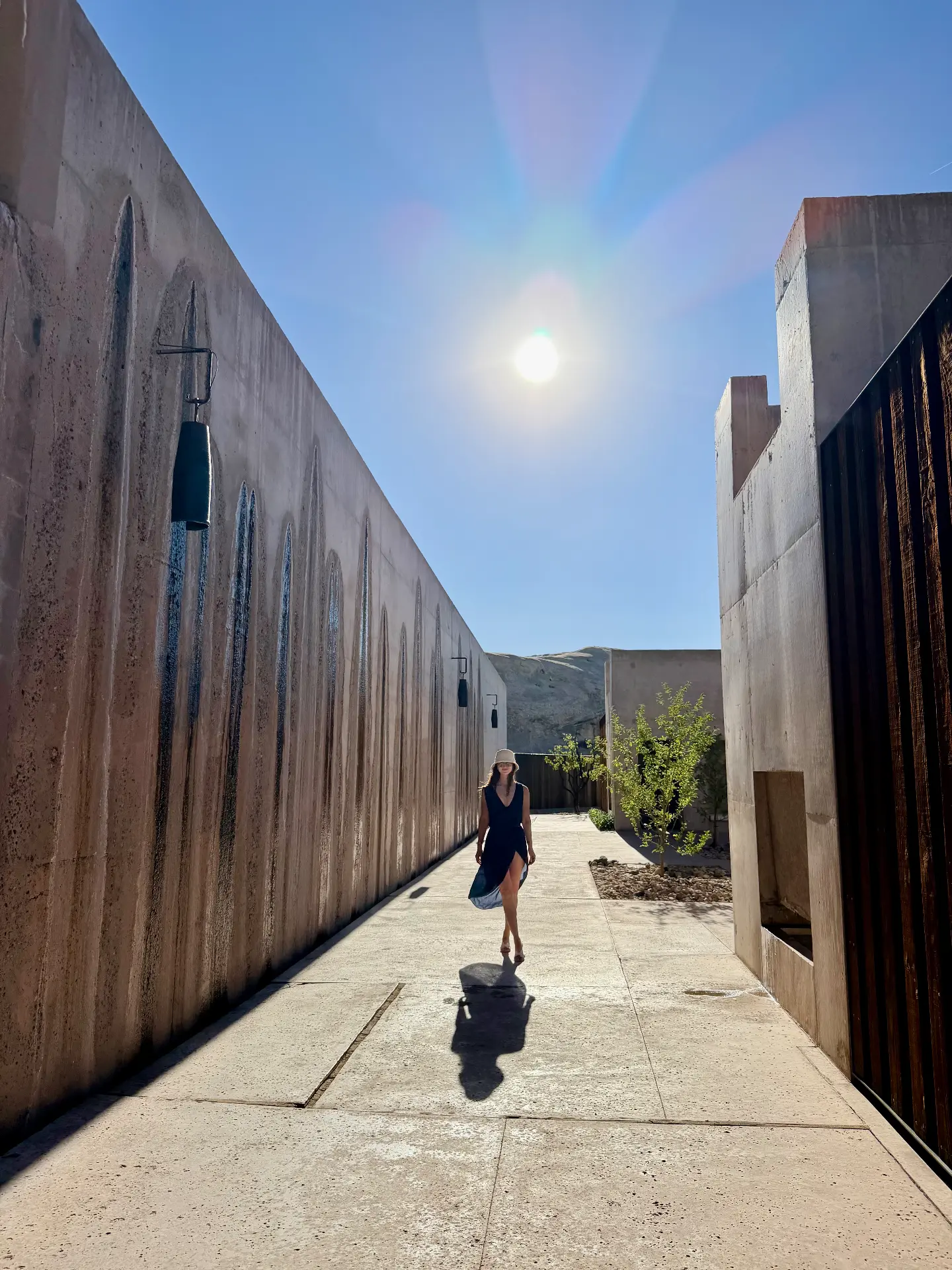
At Amangiri, silence has a shape.
I had known silence before. You can find it almost anywhere if you really look for it.
But this felt different.
The silence seemed to exist in the distance between the buildings, in the enormous rock formations, in the desert stretching beyond them and, after dark, beneath a sky crowded with stars.
It was not simply the absence of noise.
It had presence.
During the day, the colors seemed almost impossibly vivid, stone, sand, sky and the changing light moving across all of it. At night, the same landscape became something entirely different.
I found myself noticing everything.
The smell of wild sage.
The color of the sand.
The way the architecture seemed to belong to the rock rather than compete with it.
The scale of the landscape against a human body.
And the strange sensation of becoming quieter yourself when everything around you stops demanding your attention.
“The most memorable luxury rarely asks for attention. It changes the way you pay attention.”
There is a confidence in architecture that knows when to disappear.
At Amangiri, I rarely felt that the buildings were asking me to admire them separately from the landscape. Everything felt considered, but not decorated for the sake of decoration.
There was very little clutter.
That absence made every material, line, shadow and object more noticeable.
In a strange way, the space began to reflect me back to myself.
I could feel my own pace changing.
I remember thinking that I could barely hear my own heartbeat. There was a kind of complete peace in that, almost an escape back into yourself.
And yet the experience never felt austere.
The service was extraordinarily attentive, but it gave me a feeling of freedom rather than formality.
Wherever we sat, it somehow felt as though that table had become ours. The care was personal enough that the property began to feel less like a hotel and more like a place we had temporarily been allowed to call home.
One evening we had a private dinner among the rocks with a chef and a server taking care of us.
It was intimate and extraordinary without feeling staged.
I remember thinking that the chef felt almost like family, while another part of me felt like a queen, as though this enormous landscape had somehow become ours for the evening.
That combination stayed with me: being cared for completely while still feeling completely free.
The slot canyon was another kind of experience altogether.
Walking through those naturally formed walls felt less like observing a landscape and more like entering a work of art that had been forming long before any of us arrived.
The colors seemed painted, reds, oranges, muted earth yet, nothing had been designed by a human hand.
There was red sand beneath my feet, the scent of wild sage in the air, and rock shaped by time into forms that seemed almost impossible.
For moments, it felt ancient in a way that is difficult to describe.
Not old.
Ancient.
There is something humbling about standing inside a place created on a timescale that makes our own lives feel very small.
Perhaps that is part of what I brought home from Amangiri.
Not simply an appreciation for beautiful architecture or extraordinary hospitality, but a renewed awareness of attention.
When there is less visual noise, you notice more.
When service removes friction rather than displaying itself, you feel more free.
When architecture respects its surroundings, nature becomes the protagonist.
And when everything becomes quiet enough, you begin noticing yourself.
I went to the desert expecting beauty.
I did not expect silence to be one of the most beautiful things I would find there.