Design + Art
Learning to Look
On standing with a work before knowing its story, and the questions that begin when we stop looking for an answer.
By Jansel Hutton Kelly — 08 AUGUST 2026
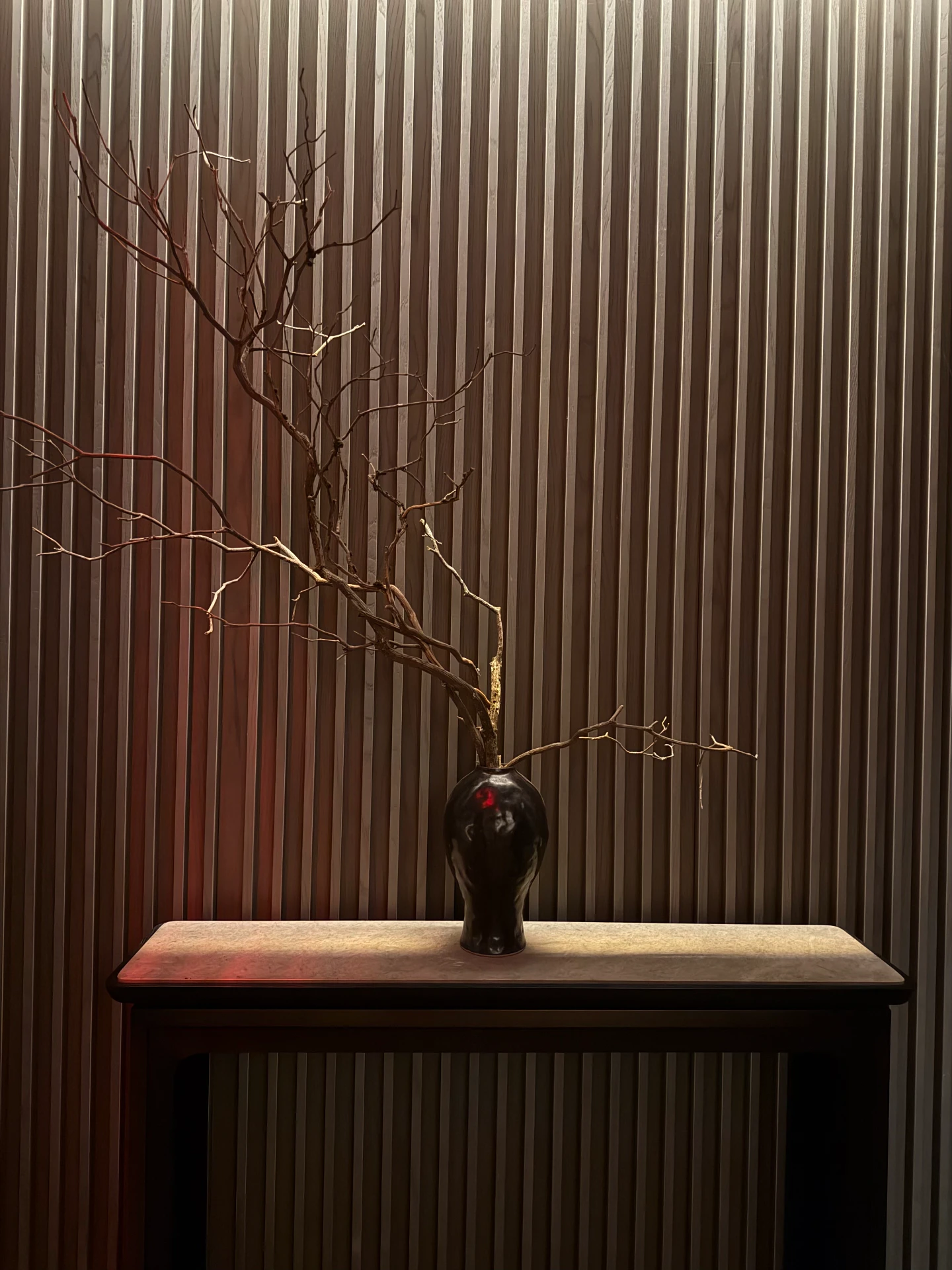
Sometimes I prefer not to know anything about a work of art when I first encounter it.
Not the artist.
Not the year.
Not what I am supposed to understand from it.
I want to look first.
I find myself moving closer.
I look at the surface. The strokes. The colors that sit comfortably together and the ones that seem almost uncomfortable beside each other.
Then I begin wondering about the person who made it.
Why that color?
Why that mark?
Was it deliberate from the beginning, or did something unexpected happen and the artist decide to leave it?
Where did they stop for the day?
Did they return the next morning and immediately know what was wrong?
Did part of the work sit unfinished for weeks because they could not solve it?
Did they think about it over dinner?
Did they dream about it?
We usually encounter art at the end of its story.
The work is finished, titled, hung and illuminated.
Everything about its presentation suggests certainty.
But I am increasingly interested in everything we cannot see.
A mark that takes seconds to make may come after years of learning where to place it.
“Perhaps learning to look is partly learning to recognize decisions.”
Something that appears effortless may contain hundreds of decisions.
Something that looks unfinished may have required enormous discipline to know exactly when to stop.
That fascinates me.
There is also something strange about time inside a museum or gallery.
We can stand in front of a work for thirty seconds that someone may have lived with for months.
We can cross a room faster than an artist may have decided on a single color.
The finished object compresses all of that time.
We see the answer.
We rarely see the questioning that produced it.
The more time I spend around art and design, the less interested I am in immediately deciding whether I “understand” something.
Instead, I try to notice my own attention.
Why did I stop here?
Why is my eye returning to that corner?
Why does one color change the way I see another?
Why did the artist leave so much empty space?
Why does moving one element, even in my imagination seem as though it would change everything?
These questions have begun to influence the way I look beyond art.
At an object.
At a room.
At typography.
At packaging.
At a landscape.
And increasingly, at the things I am trying to create myself.
Creating something is not only having the original idea.
It is looking again.
Changing something.
Removing something.
Living with it.
Returning tomorrow.
And eventually deciding that another change would not make it better, only different.
I used to think looking at art meant trying to understand what the artist wanted to say.
Now I am less interested in finding the correct interpretation.
I want to stay with the questions a little longer.
Who stood here before this was finished?
What did they change?
What did they almost remove?
What did they know to leave alone?
Maybe learning to look is not about knowing more.
Maybe it begins by becoming comfortable with not knowing.